111-1024x458.png)
Which battery tab welding method wins?
Laser, ultrasonic, or resistance? Compare precision, speed, and cost.
This is popup title
You don't need to waste your time and money anymore.
BLOG

CONTACT US
Laser vs Ultrasonic vs Resistance Welding for Battery Tabs
Introduction to Battery Tab Welding
Battery tab welding is a critical step in lithium-ion battery production. The tab connects the cell electrode to the external circuit, and weld quality directly affects battery performance, safety, and lifespan. Poor welding can cause high resistance, mechanical failure, short circuits, or even thermal runaway.
As the demand for high-performance batteries in electric vehicles, consumer electronics, and energy storage continues to grow, manufacturers are exploring the most efficient, reliable, and cost-effective welding methods. Among these, laser welding, ultrasonic welding, and resistance welding are the most commonly used techniques for battery tabs. Each method offers unique advantages and limitations, depending on the material, thickness, and production requirements.
Common Welding Techniques for Battery Tabs
Laser Welding
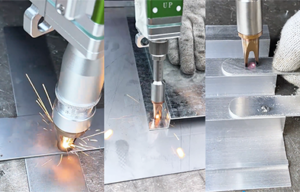
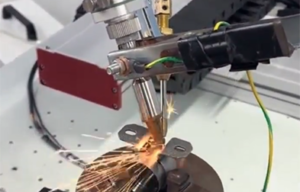
Laser welding uses a focused laser beam to melt and fuse materials together. It is especially suitable for copper, aluminum, and nickel-plated tabs, which are common in lithium-ion batteries.
Advantages of Laser Welding:
High precision: Minimal heat-affected zone, lower risk of damaging nearby components.
High speed: Rapid cycle times, ideal for high-volume production.
Low thermal impact: Minimal distortion, preserves thin tab integrity.
Flexibility: Handles complex shapes and thin materials with consistent results.
Applications: Laser welding is widely used in electric vehicle (EV) battery modules and high-performance consumer electronics batteries, where reliability and long-term stability are critical.
Ultrasonic Welding
Ultrasonic welding uses high-frequency vibrations to create frictional heat at the interface of battery tabs and electrodes, fusing them without significant melting.
Advantages of Ultrasonic Welding:
No high-temperature melt: Reduces thermal stress and avoids damaging sensitive materials.
Energy-efficient: Requires lower energy consumption compared to resistance or laser welding.
Rapid process: Suitable for high-volume assembly lines of small and medium-sized batteries.
Limitations:
Thickness constraints: Only suitable for thin tabs.
Material limitations: Can struggle with dissimilar metal combinations.
Applications: Ultrasonic welding is effective for small lithium-ion cells in portable electronics and lightweight energy storage devices.
Resistance Welding
Resistance welding, often called spot welding, applies high current through electrodes to fuse battery tabs to electrodes. This method has been widely used in battery manufacturing for decades.
Advantages of Resistance Welding:
Simple and cost-effective: Equipment is less complex compared to laser systems.
High current capacity: Suitable for thick or large battery tabs.
Reliable for mass production: Proven method in industrial battery assembly.
Limitations:
Electrode wear: Frequent replacement may increase maintenance costs.
Heat spread: Higher thermal impact may cause deformation or oxidation.
Material restrictions: Thin or high-reflective metals are challenging to weld consistently.
Applications: Resistance welding is common in large-scale EV battery packs and industrial energy storage modules, where robust joints are required.
Comparative Analysis: Laser vs Ultrasonic vs Resistance
Weld Quality:
Laser welding: Precise, high-strength welds with minimal porosity.
Ultrasonic welding: No high-temperature melt, but struggles with thicker tabs.
Resistance welding: Strong joints for thick tabs, but risks oxidation and distortion.
Production Efficiency:
Laser welding supports high-speed, automated lines, ideal for large-scale production.
Ultrasonic welding is fast for small cells but less flexible for complex assemblies.
Resistance welding is efficient for high-volume production but requires downtime for electrode maintenance.
Cost-Effectiveness:
Laser welding requires higher initial investment but reduces rework and improves yield.
Ultrasonic welding has moderate cost and lower energy consumption.
Resistance welding has lower upfront cost but may incur ongoing electrode replacement and maintenance costs.
Material Flexibility:
Laser welding is versatile, capable of joining copper, aluminum, and multi-layer coatings.
Ultrasonic welding works best with thin tabs of compatible materials.
Resistance welding is reliable for conventional metals but less effective on high-reflective or ultra-thin materials.
Case Studies and Industry Applications
Electric Vehicle Battery Modules:
Laser welding is preferred for copper and aluminum battery tabs, providing high conductivity and consistent weld quality under strict safety standards.Consumer Electronics Batteries:
Ultrasonic welding is effective for small lithium-ion cells, achieving quick cycles without excessive heat that could damage sensitive components.Renewable Energy Storage Batteries:
Resistance welding remains popular for large-format modules, where thick tabs require robust electrical connections and mechanical strength.
Factors to Consider When Choosing a Welding Method
Battery Tab Material and Thickness: Thin aluminum or copper requires precision methods like laser welding.
Production Volume and Automation Level: High-volume lines benefit from automated laser or resistance welding; small-scale lines may use ultrasonic methods.
Heat-Sensitive Components: Laser and ultrasonic welding minimize heat impact compared to resistance welding.
Required Mechanical and Electrical Performance: Laser welding offers the best balance for strength and conductivity, especially in high-performance applications.
Future Trends in Battery Tab Welding
AI and Vision Integration: Real-time monitoring ensures weld consistency and defect detection.
High-Speed Multi-Axis Laser Welding: Enables complex tab designs and mass production efficiency.
Hybrid Welding Approaches: Combining methods to optimize cost, quality, and speed for next-generation battery modules.
Conclusion
Choosing the right welding method depends on material, thickness, production volume, and performance needs. Laser welding offers precision, speed, and low heat input—ideal for high-performance batteries. Ultrasonic welding works well for thin tabs and small-scale production with low energy use. Resistance welding remains a practical choice for thick tabs and large-scale production. Weighing each method’s pros, cons, and cost is key to reliable, high-quality battery assembly.