111-1024x458.png)
BLOG
CONTACT US
How Galvo & Desktop Laser Welders Address U.S. Electronics Assembly Challenges
From automotive wire harnesses to consumer electronics connectors, from sensor housings to small metal components, U.S. electronics manufacturers are facing increasing demands for welding precision. As component dimensions shrink to the millimeter scale and heat-sensitive elements crowd around weld points, the flexibility of traditional handheld laser welding begins to yield to higher requirements for stability, consistency, and positioning accuracy.
This is where galvo laser welders and desktop laser welders deliver real value—not replacing the flexibility of handheld welding, but providing more reliable equipment options for applications requiring higher repeatability and smaller heat-affected zones.
Chapter 1: The Precision Challenge in Electronics Assembly—When Do You Need More Than Handheld?
1.1 The Right Applications for Handheld Laser Welding
Handheld laser welding offers flexibility, portability, and adaptability, making it ideal for:
Repair and rework
Small-batch, high-mix production
On-site work on large components
Applications with limited access
However, in certain scenarios, the limitations of handheld welding become apparent:
Repeat positioning for small welds: Manual operation makes consistent weld placement difficult
Working near heat-sensitive components: Hand movement can lead to inconsistent heat input
High-volume standardized production: Consistency requirements outweigh flexibility needs
1.2 When to Consider Galvo or Desktop Welders
If your production involves the following situations, a galvo or desktop laser welder may be a more suitable choice:
| Scenario | Typical Products | Key Requirements |
|---|---|---|
| Multi-point repetitive welding | Connector terminals, pins | Consistent weld position and energy input |
| Precision seam welding | Small housings, thin sheet joining | Accurately controlled weld paths |
| Heat-sensitive component assembly | Metal parts with plastic bases | Minimized heat-affected zone |
| Automation integration | High-volume production lines | Compatibility with robots and conveyors |
Note: These are typical scenarios. Actual suitability depends on specific part evaluation.
Chapter 2: Technical Characteristics of Two Precision Welding Solutions
When selecting a laser welding machine, understanding the technical differences between available options helps guide your decision:
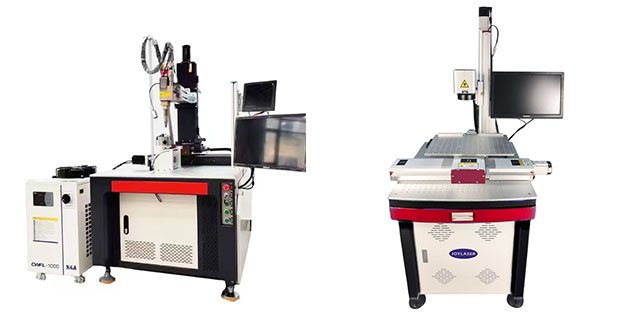
2.1 Galvo Laser Welders: Optimized for Multi-Point Repetitive Applications
Galvo welding systems use high-speed scanning mirrors to position the laser beam, enabling rapid movement between weld points on the same workpiece—ideal for applications requiring multiple identical welds.
| Characteristic | Description | Typical Applications |
|---|---|---|
| Fast point-to-point positioning | Millisecond-level movement between welds | Simultaneous welding of multiple connector terminals |
| Programmable beam paths | Preset welding patterns for complex geometries | Seam welding on irregular small components |
| Compared to handheld | More consistent positioning, reduced operator variability | Repetitive tasks in batch production |
2.2 Desktop Laser Welders: Built for Precision Path Control
Desktop welding systems mount the laser head on a precision motion platform, moving the workpiece to achieve the desired weld path. Their primary strength lies in stable path control.
| Characteristic | Description | Typical Applications |
|---|---|---|
| Precise path control | High repeatability from motion platform | Small housing sealing, thin sheet joining |
| Vision integration | Pre-weld alignment and post-weld inspection | Parts requiring accurate positioning |
| Compared to handheld | Better suited for standardized, repeatable production | High-volume manufacturing of established designs |
2.3 A Simple Guide to Choosing
| If you need… | Galvo Welder | Desktop Welder | Handheld Welder |
|---|---|---|---|
| Fast processing of multiple identical welds | ✅ Good fit | ⚠ Less efficient | ⚠ Consistency challenges |
| Precise path control for seam welds | ⚠ Limited | ✅ Good fit | ⚠ Operator-dependent |
| Flexibility for varying parts | ⚠ Requires programming | ⚠ Requires fixture changes | ✅ Good fit |
| Low-volume, high-mix production | ⚠ Programming cost | ⚠ Fixture cost | ✅ Good fit |
| High-volume standardized production | ✅ Good fit | ✅ Good fit | ⚠ Potential bottleneck |
Note: This is a general reference. Sample testing is recommended for specific applications.
Chapter 3: Typical Applications—Where These Machines Deliver Results
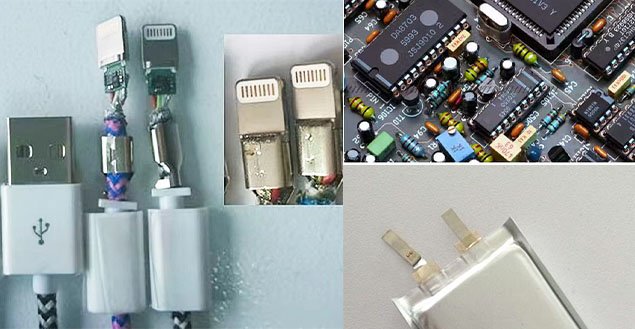
The following applications represent achievable results with conventional industrial laser welding capabilities, not specialized or experimental processes.
3.1 Connectors and Terminals
Part characteristics: Dense terminal arrays requiring consistent individual welds
Recommended equipment: Galvo laser welder
Typical requirements: Strong joints without damaging surrounding plastic
Feasibility: Standard process, validated through sample testing
3.2 Small Metal Component Assembly
Part characteristics: Thin sheet joining, tack welding
Recommended equipment: Desktop or galvo laser welder
Typical requirements: Clean welds, minimal distortion
Feasibility: Standard process; parameters adjusted based on material thickness
3.3 Sensor Housing Sealing
Part characteristics: Small metal housings requiring continuous seams
Recommended equipment: Desktop laser welder
Typical requirements: Consistent, leak-free seams
Feasibility: Standard process; proper fixturing essential
3.4 Micro-Motor Components
Part characteristics: Commutator and terminal spot welds
Recommended equipment: Galvo laser welder
Typical requirements: Strong, accurately positioned welds
Feasibility: Standard process; parameters adjusted based on materials
Chapter 4: Process Validation—Determining Suitability for Your Parts
Before evaluating whether a galvo or desktop laser welder is right for your application, consider these factors:
4.1 Factors Affecting Weld Results
| Factor | Description | Impact on Results |
|---|---|---|
| Material type | Stainless steel, carbon steel, copper, aluminum, etc. | Different materials require different parameter settings |
| Part thickness | Typically achievable in 0.1mm–2mm range | Too thin risks burn-through; thicker requires higher power |
| Weld accessibility | How easily the weld location can be reached | Determines fixturing requirements |
| Production volume | Prototype, small batch, high volume | Influences equipment selection and fixturing investment |
4.2 Recommended Validation Process
For new applications, the following step-by approach helps determine feasibility:
Initial discussion: Provide part drawings or photos, specify materials and requirements
Sample testing: Send actual parts (3-5 pieces) for welding trials in the applications lab
Results evaluation: Assess weld appearance, strength, and any effect on surrounding areas
Parameter development: Identify suitable power, speed, pulse shape, and other settings
Small-batch verification: Weld 10-20 pieces with developed parameters to check consistency
Note: These are general recommendations. Actual validation steps may be adjusted based on specific requirements.
Chapter 5: Frequently Asked Questions
Q1: Which is better for my parts—a galvo welder or a desktop welder?
A: It depends on your specific needs. If your parts require multiple identical welds processed quickly (such as connector terminals), a galvo welder is typically more efficient. If you need precise path control for seam welds (such as housing sealing or thin sheet joining), a desktop welder offers better control. Sample testing with both approaches can provide clear guidance.
Q2: Can you weld copper parts?
A: Yes, but copper has lower laser absorption than steel, requiring higher power density and appropriate parameter settings. In conventional industrial applications, copper welding is achievable with proper process development. Sample testing is recommended to verify results.
Q3: Will welding damage nearby plastic components?
A: If weld points are sufficiently distant from plastic areas (typically 3mm or more) and welding time is controlled, heat effects can be limited to an acceptable range. Actual results depend on part geometry and material properties. Providing detailed drawings helps with feasibility assessment.
Q4: Can these welders be integrated into existing production lines?
A: Yes. Galvo and desktop welders typically offer standard communication interfaces (such as I/O, Ethernet) and can be integrated with robotics and conveyors. Specific integration approaches depend on your line layout and requirements.
Q5: How do you determine the right welding parameters for my parts?
A: Parameters (power, speed, frequency, pulse width, etc.) are developed based on material type, thickness, and joint requirements. For new applications, sample testing provides reference parameters that can be fine-tuned during production ramp-up.
Conclusion: Choose the Right Equipment for Your Application
In electronics assembly, there is no single “best” welding method. Handheld laser welders offer flexibility; galvo welders deliver efficiency for multi-point applications; desktop welders provide stability for precision path control. Each has its place.
The key is: Understand your specific requirements, validate through testing, and choose the laser welding machine that fits your needs.
If you’re looking for more consistent solutions for connectors, terminals, small metal components, or similar applications, reach out to the applications engineering team at JOYLASER—a experienced manufacturer of laser welding equipment.
[Request a Sample Test for Your Electronic Components]
Submit your parts or drawings. Our applications engineers will conduct welding trials and provide results evaluation with parameter recommendations.
This article was prepared by the JOYLASER applications engineering team. JOYLASER manufactures laser welding equipment and provides process support and technical insights for manufacturers worldwide. Process descriptions are based on conventional industrial laser welding capabilities. Actual results may vary depending on part materials, dimensions, and requirements. Sample testing is recommended to verify suitability for specific applications.
Learn more: [Link to Galvo Welder Page] · [Link to Desktop Welder Page] · [Link to Handheld Welder Page]