111-1024x458.png)
Thin metal. Zero warp. Clean welds.
Laser welding tips for thin stainless steel and aluminum. No burn-through. No distortion.
This is popup title
You don't need to waste your time and money anymore.
BLOG
CONTACT US
How to Weld Thin Metal Without Warping: A Laser Welding Guide
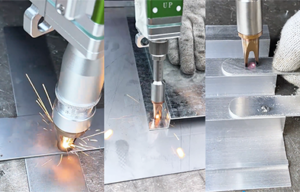
Thin metal welding is one of the most delicate processes in modern manufacturing. The thinner the material, the more likely it is to warp, distort, or burn through. But with the right techniques and laser welding equipment, you can weld metal as thin as 0.2 mm or 0.3 mm—without deformation.
In this guide, we explore how laser welding machines enable clean, strong, and distortion-free welds on thin metal, and how you can achieve the best results in your own production line.
Introduction: The Challenges of Welding Thin Metal
Welding thin metal presents several difficulties:
Heat distortion and warping
Burn-through from too much energy
Inconsistent penetration depth
Weak joints from overheating
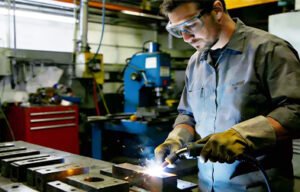
Traditional methods like TIG or MIG often apply too much heat or lack the needed precision. That’s where laser welding comes in.
Why Laser Welding Is Ideal for Thin Metal
Laser welding offers clear advantages for thin or sensitive materials:
Low heat input: Reduces risk of distortion
High precision: Micron-level control of weld seams
Small heat-affected zone (HAZ): Preserves material properties
Non-contact process: Less mechanical stress
Laser welding uses focused energy to create deep, narrow welds. It works well on thin materials like stainless steel, aluminum, and nickel alloys.
Key Factors That Affect Thin Metal Deformation
To understand how deformation happens, consider these factors:
1. Material Thickness: Thinner metal warps more easily from heat.
2. Heat Input: Too much energy over time causes expansion and distortion.
3. Joint Design: Poor fit-up increases burn-through risk.
4. Welding Speed: Slower speed means more heat and more distortion.
5. Clamping or Fixturing: Poor clamping lets parts move during welding.
How Laser Welding Machines Prevent Deformation
Modern laser welding systems, especially fiber laser welders, offer:
Ultra-focused beams: Energy stays where it’s needed, not spreading to unwanted areas.
Adjustable pulse settings: Reduces continuous heat—ideal for thin materials.
Real-time monitoring: Automatically controls power, speed, and focus.
Non-contact welding: No pressure points or alignment issues from fixtures.
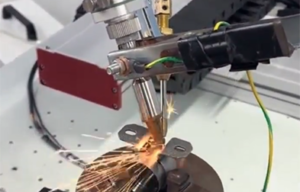
Fiber lasers in the 100W to 1000W range are common for thin metal. For example, a 300W pulsed fiber laser can handle metals as thin as 0.2 mm.
Best Practices for Welding Thin Metal with Lasers
To get clean welds without distortion:
Optimize power and frequency: Use pulsed lasers for better control on thin sheets.
Control focus position: Focus slightly below the surface to avoid burn-through.
Choose the right shielding gas: Argon or nitrogen reduces oxidation and porosity.
Pre-clean the surface: Dirt or oil can cause arc instability or holes.
Use clamping fixtures: Prevents movement and gives cleaner seams.
Set high travel speeds: Faster movement means less heat buildup.
Test on scrap: Always run tests before full production.
Suitable Laser Welding Machine Types for Thin Metal
Common laser systems for thin metal include:
1.Precision Pulsed Fiber Laser
2.Best for micro-welding or parts under 0.5 mm
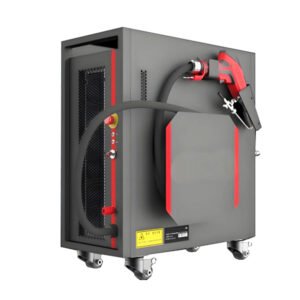
3.Handheld Fiber Laser Welder
4.Good for small-scale work and flexible setups
5.Galvo Laser Welder
6.High-speed scanning for small, repeated patterns
7.Desktop Jewelry Laser Welder
8.Ideal for tiny or intricate parts like 0.3 mm gold
Common Thin Metal Applications in Different Industries
Thin metal laser welding is used across many industries:
1.Electronics: Sensor housings, micro-circuits
2.Battery manufacturing: Foil tabs, thin copper and aluminum
3.Jewelry: Gold, silver, platinum (especially under 0.5 mm)
4.Medical devices: Stainless steel surgical tools
5.Automotive: Airbag sensors, connectors
Real-World Case Study: Laser Welding for 0.3mm Stainless Steel
Problem: A customer needed to weld 0.3 mm 304 stainless steel for an automotive pressure sensor housing—without warping.
Solution:
A 200W pulsed fiber laser with high-frequency modulation.
Results:
Zero visible distortion
Smooth weld seams
No post-weld grinding
Reject rate dropped significantly (based on customer feedback)
Common Mistakes to Avoid When Welding Thin Metal
Avoid these common errors:
Overpowering: Causes holes or burn-through
Wrong focal length: Reduces beam effectiveness
Poor fixturing: Leads to vibration and inconsistency
Ignoring cooling intervals: Causes overheating and stress
Using the wrong shielding gas: Leads to oxidation or porosity
Conclusion: Achieving Precision and Strength Without Distortion
Laser welding has changed how thin metals are joined. With the right equipment and process control, you can weld materials as thin as 0.2 mm—no warping, no burn-through, no loss of strength.
For manufacturers in electronics, automotive, medical, and jewelry industries, laser welding is the go-to solution for precision joining of thin metals.
If you want better production quality or lower reject rates, a good laser welding system is a solid first step.