111-1024x458.png)
Thin or thick metal? Match your laser right.
Laser welding machine selection guide by metal thickness. Cases from 0.5mm to 6mm.
This is popup title
You don't need to waste your time and money anymore.
BLOG
CONTACT US
How to Choose a Laser Welding Machine by Metal Thickness
Introduction
Choosing the right laser welding machine for your metal thickness is critical. Whether you weld ultra-thin stainless steel or thick aluminum plates, the wrong setup can cause under-penetration, overheating, or weak joints. This guide helps you match laser power, spot size, and cooling to your material thickness—so you can improve quality, productivity, and ROI.
Why Metal Thickness Matters in Laser Welding
Metal thickness affects heat absorption, penetration depth, and weld quality.
• Thin materials (under 1mm) can warp or burn through if the laser is too powerful.
• Thick materials (5mm or more) need deeper penetration and higher power for full fusion.
Power alone isn’t enough. Beam quality, spot size, and speed must also match your material thickness.
Common Laser Welding Technologies and Their Characteristics
The most common laser welding technology for metal thickness ranges is fiber laser.
• Fiber lasers work well on both thin and thick metals, including reflective materials like aluminum and copper.
• MOPA fiber lasers offer adjustable pulse width, making them ideal for thin or heat-sensitive materials.
CO₂ and Nd:YAG lasers are rarely used in modern metal welding and are not covered here.
Recommended Laser Welding Machines for Thin Metal Sheets
For materials under 2mm, precision is key. Look for:
• Low to medium power (200W–1000W)
• High beam quality and fine focus control
• Fast positioning (Galvo head optional)
Recommended machine types:
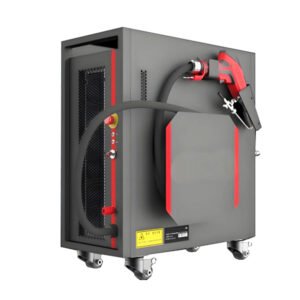
• Handheld fiber laser welder (low-power fiber source)
• MOPA Galvo laser welder (precision work)
• Jewelry laser welder (ultra-fine welds under 1mm)
Common applications: stainless steel kitchenware, lithium battery shells, thin aluminum housings.
Best Laser Welding Solutions for Thick Metal Plates
For materials above 3mm (structural parts, heavy fabrications), you need high power and deep penetration.
Recommended machine types:
• High-power fiber laser (1.5kW–3kW)
• Platform fiber laser with automation
• Robotic welding cell (for high-volume production)
These systems offer better thermal control, stable weld beads, and work well on carbon steel, aluminum, and stainless steel.
Key Factors to Consider When Matching Machine to Thickness
Key factors to match machine to thickness:
• Laser power: Lower for thin metal (200W–1000W), higher for thick (1500W–3000W).
• Spot size: Smaller for thin parts, larger for thick sections.
• Welding speed: Varies with material and thickness. Wrong speed = weak or porous welds.
• Cooling: Air cooling for low power, water cooling for high power.
• Pulse vs CW: Pulsed for thin materials, continuous wave (CW) for thick plates.
Material Type and Joint Design Considerations
Even at the same thickness, different metals behave differently:
• Stainless steel: Good absorption, works with most laser types.
• Aluminum: Reflective. Needs high-power fiber laser and clean surface.
• Brass and copper: Highly reflective and thermally conductive. Often require MOPA or pulsed lasers.
Joint design (lap, butt, T-joint) also affects laser access and energy distribution.
Case Studies: Laser Welding Applications by Thickness
Case 1: 0.5mm stainless steel enclosures
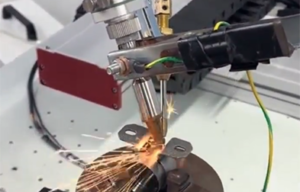
A 300W MOPA fiber laser with Galvo head was used for high-speed seam welding. Results showed minimal deformation and good surface finish.
Case 2: 6mm carbon steel frame welding
A 2000W platform fiber laser with automatic clamping delivered consistent penetration and strong joints.
Case 3: 2mm aluminum kitchen equipment
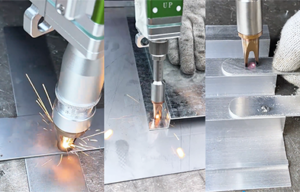
A handheld 1500W fiber laser with wobble head improved gap tolerance and reduced visible heat marks.
Mistakes to Avoid When Choosing a Laser Welding Machine
Common mistakes to avoid:
• Overpowering thin materials → burn-through and cosmetic damage.
• Underpowering thick metals → weak welds and lack of fusion.
• Ignoring material reflectivity (aluminum, copper) → unreliable results.
• Choosing the wrong cooling system → overheating or instability.
• Neglecting joint access and fixturing → inconsistent quality.
Conclusion: Match the Right Machine to Your Metal Needs
Choosing the right laser welding machine is about more than watts. You need to match power, spot size, cooling, and welding mode to your metal’s thickness, composition, joint design, and production volume.
Whether you run a small shop welding delicate parts or a large plant processing thick structural components, JOYLASER has laser welding solutions for your application.