111-1024x458.png)
Medical devices demand precision. Laser welding delivers.
Clean, precise, biocompatible laser welding for medical device manufacturing.
This is popup title
You don't need to waste your time and money anymore.
BLOG
CONTACT US
Why Laser Welding Is Ideal for Precision Medical Device Manufacturing
Introduction
The medical industry demands precision, reliability, and safety. These standards are especially critical when assembling medical devices. Any defect can affect patient safety. Among available joining technologies, laser welding has become the leading choice for precision medical device manufacturing because of its accuracy, minimal heat impact, and biocompatible results.
Why Precision Matters in Medical Device Manufacturing
Medical devices are often small, intricate, and made from biocompatible materials like titanium, stainless steel, or polymers. A single misalignment or material flaw can cause device failure or rejection during regulatory testing. Manufacturers need a welding method that provides micron‑level precision and repeatability. Laser welding delivers that consistently.
Common Welding Challenges in the Medical Industry
Manufacturing challenges in the medical device industry include:
• Heat distortion
• Material contamination
• Inconsistent weld quality
• Difficulty with miniaturized components
Traditional welding methods like TIG or resistance welding often struggle to meet strict medical‑grade requirements. Laser welding offers a non‑contact, clean, and accurate solution that reduces these challenges.
What Is Laser Welding?
Laser welding uses a focused laser beam to melt and join metal or plastic parts. It works especially well in high‑precision applications because of its:
• Minimal heat‑affected zone (HAZ)
• High processing speed
• Narrow, deep penetration
These features make it ideal for thin‑walled components, micro assemblies, and temperature‑sensitive materials.
Benefits of Laser Welding for Medical Devices
Key reasons why laser welding is preferred for medical device manufacturing:
• High precision: Accurate control over beam diameter and energy ensures consistent welds.
• Minimal distortion: Localized heat preserves the integrity of surrounding parts.
• Non‑contact process: Ideal for delicate components such as catheters and stents.
• High repeatability: Consistent quality across mass production.
• Biocompatible joints: Clean laser welds support safe implantation.
• Cleanroom friendly: Low maintenance and reduced physical handling suit sterile production environments.
Key Medical Components Using Laser Welding
Laser welding is used in a wide range of medical devices and instruments, including:
• Surgical tools
• Pacemaker casings
• Catheters and guidewires
• Needles and cannulas
• Orthopedic implants
• Stents and valves
• Endoscopic instruments
Each component may require different welding geometries and materials. Laser welding adapts with good flexibility.
Fiber Laser Welding vs Traditional Welding Methods
Compared to resistance welding or TIG welding, fiber laser welding offers:
| Feature | Traditional Welding | Fiber Laser Welding |
|---|---|---|
| Heat Affected Zone | Large | Minimal |
| Speed | Moderate | High |
| Automation Ready | Limited | Excellent |
| Weld Precision | Moderate | High |
| Cleanroom Use | Difficult | Suitable |
| Material Flexibility | Limited | Broad range |
Fiber lasers are preferred for medical applications because of their low power consumption, high efficiency, and tight beam control.
Biocompatibility and Laser Welding
Medical devices must be biocompatible — they must not cause adverse reactions inside the human body. Laser welding produces clean welds without filler materials or fluxes. This helps prevent contamination and supports biocompatibility, which is especially important for implants and surgical tools.
Cleanroom Compatibility and Automation
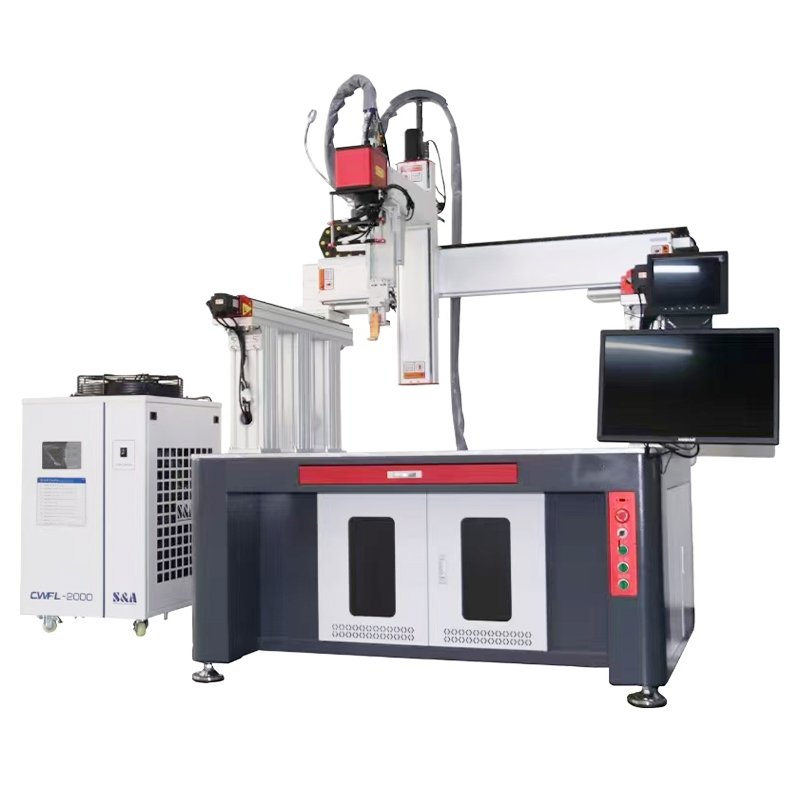
Laser welding systems integrate easily into cleanroom environments, a common requirement in medical device production. Enclosed, automated setups reduce human intervention and contamination risk. Robotic arms and CNC controllers can further improve consistency and throughput.
Regulatory Compliance and Safety
Laser welding helps manufacturers meet global regulatory standards, including:
• FDA regulations in the U.S.
• CE marking in Europe
• ISO 13485 quality system compliance
Because the process minimizes defects and supports full traceability, it is easier to maintain documentation and meet validation requirements during audits.
Case Studies: Successful Applications in Medical Device Welding
Case Study 1: Laser Welding for Pacemaker Shells
A medical OEM replaced resistance welding with fiber laser welding. Production speed improved by approximately 30%, and they achieved near‑zero defects across a large production run.
Case Study 2: Catheter Tip Welding
A global catheter manufacturer adopted automated laser micro‑welding for guidewires and catheter tips. The result was significantly better weld consistency and lower scrap rates.
Choosing the Right Laser Welding System
When selecting a laser welding machine for medical use, consider:
• Power and wavelength (e.g., 1064 nm for metals)
• Beam delivery system (galvo head, fiber delivery, etc.)
• Workstation size and enclosure
• Precision motion control
• Software with traceability and quality control features
Partnering with a provider that offers customized laser welding solutions and after‑sales support is important for long‑term success.
Conclusion
As medical devices become more complex and miniaturized, the need for precision and reliability grows. Laser welding is not just a good joining method — it is a necessity for today‘s medical device manufacturing. With its precision, cleanliness, and adaptability, laser welding helps manufacturers meet regulatory and performance standards while staying competitive.