111-1024x458.png)
What does a laser welder really cost?
Real cost breakdown. Handheld to automated. 5-year ROI analysis.
This is popup title
You don't need to waste your time and money anymore.
BLOG
CONTACT US
Error: Contact form not found.
What Is the Real Cost of a Laser Welding Machine? Is It Worth the Investment?
1. Introduction
Laser welding has become a popular joining technology in modern manufacturing. Whether you work in automotive, electronics, jewelry, or kitchen appliances, the same question comes up: What does a laser welding machine really cost? And is it worth it?
This article breaks down the pricing, ongoing costs, and returns of laser welding systems. It helps you make a smart, informed decision.
2. Understanding the Base Cost of a Laser Welding Machine
The upfront price of a laser welding machine varies by type, configuration, and brand. Typical ranges:
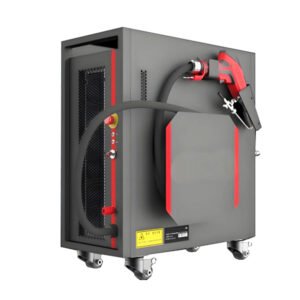
• Handheld fiber laser welders: 3,000–3,000–10,000 USD
• Mid-range platform fiber laser welders: 10,000–10,000–30,000 USD
• Fully automated laser welding systems: $50,000 USD and up
But the purchase price is just the start. To understand your true investment, you need to look beyond the sticker price.
3. Factors That Affect the Price of Laser Welders
Type of Laser Welding Technology
Different laser technologies come at different price points:
• Fiber laser welding: most popular, stable, cost-efficient
• CO₂ laser welding: less common now, bulky and expensive
• MOPA laser welding: for high-precision or dissimilar metals
Power Output and Laser Source
Laser power (measured in watts) affects both performance and price. General guidelines:
• 1000W systems: ideal for thin metal
• 1500W – 2000W systems: good for general industrial use
• 3000W+ systems: handle thick metals and high-speed welding
Automation Level
Manual, semi-automatic, and fully automated systems have vastly different costs. Automation boosts efficiency but raises the initial investment.
Accessories and Consumables
Cooling systems, protective gas nozzles, wire feeders, and laser heads all add to the final quote.
4. Hidden and Ongoing Costs
Energy Consumption
Laser welders are typically more energy-efficient than traditional welding systems, but they still consume power, especially at high wattages.
Maintenance and Repairs
While fiber lasers are low-maintenance, occasional servicing, lens cleaning, and system calibration are needed.
Training and Labor Costs
Although handheld laser welders are easy to operate, some initial training is necessary, especially for high-precision industrial applications.
Spare Parts and Gas Supply
Shielding gases like argon or nitrogen are essential in certain applications. Though the consumption is minimal, it’s a recurring cost.
5. Price Range by Machine Type
| Machine Type | Typical Cost Range | Ideal For |
|---|---|---|
| Handheld Fiber Laser Welder | 3,000–3,000–10,000 USD | Small factories, repairs |
| Platform Fiber Laser Welder | 10,000–10,000–30,000 USD | Medium-scale manufacturing |
| Fully Automated Welding Cell | $50,000+ USD | Automotive, aerospace, high-output |
6. Comparing Laser Welding with Traditional Welding Methods
| Feature | Laser Welding | Traditional Welding |
|---|---|---|
| Speed | Fast | Slower |
| Precision | High | Moderate |
| Heat-Affected Zone | Small | Large |
| Material Deformation | Minimal | Common |
| Labor Dependence | Lower | Higher |
| Rework | Rare | Frequent |
Despite the higher initial investment, laser welding often reduces operational costs long-term due to efficiency and quality.
7. Return on Investment (ROI) Analysis
Cost Per Weld
Laser welding can reduce cost per weld by up to 50% compared to TIG or MIG welding, thanks to higher speeds and reduced rework.
Productivity and Labor Efficiency
One trained operator can handle multiple welding tasks, especially with semi-automated or robotic setups.
Reduction in Rework and Waste
Laser welding produces clean, precise welds, significantly minimizing post-processing and waste material.
8. Case Study: Real Cost Breakdown of a 1500W Fiber Laser Welding Machine
Here‘s a typical 5‑year cost breakdown for a 1500W fiber laser welder (example only — actual costs vary):
| Category | Estimated Cost (USD) |
|---|---|
| Machine Purchase | $12,000 |
| Energy Consumption | $1,500 |
| Maintenance | $800 |
| Training & Setup | $500 |
| Spare Parts & Gas | $1,000 |
| Total Cost | $15,800 |
If this machine runs 250 days a year at 200 welds per day, the cost per weld comes out to roughly $0.13 — very competitive.
9. Is It Worth the Investment?
Yes. For most manufacturers, laser welding is a smart long-term investment because it gives you:
• Higher productivity
• Lower operating costs
• Better product quality
• A competitive edge
If your business depends on precision, speed, and working with different materials, laser welding delivers real value.
10. Tips for Making a Smart Purchase Decision
Evaluate your production volume and materials before choosing a model
Select a reliable manufacturer with strong technical support
Ask about warranty and after-sales service
Consider energy efficiency and safety features
Calculate the payback period based on projected use
11. Conclusion
The real cost of a laser welding machine isn‘t just the sticker price. When you‘re ready to buy, think about the full picture — energy, maintenance, labor, and productivity gains.
For many industries, laser welding isn’t just a purchase. It‘s a strategic investment that pays off over the long term.