111-1024x458.png)
Faster, cleaner, more efficient metal processing
Laser welding boosts efficiency. 2-10x faster, less rework, automation ready.
This is popup title
You don't need to waste your time and money anymore.
BLOG
CONTACT US
How Laser Welding Machines Boost Metal Processing Efficiency
1. Introduction
Manufacturers need faster, more precise, and cost-effective metal processing. Whether you work in automotive, electronics, kitchenware, signage, or medical devices, you need higher efficiency without sacrificing quality. Laser welding machines deliver exactly that.
2. Challenges of Traditional Metal Processing
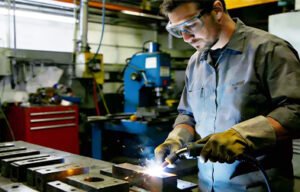
Traditional methods like TIG, MIG, and resistance welding are common, but they have limits in speed, precision, and automation. Manual welding often leads to inconsistent results, low efficiency, and rising labor costs.
3. What is Laser Welding?
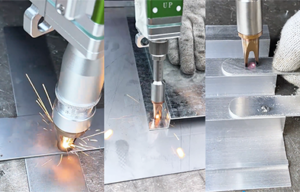
Laser welding uses a high-intensity beam to join metal parts. It gives you deep penetration, high speed, and precise control. Fiber laser welding is especially energy-efficient and works well with automation.
4. Key Features of Laser Welders
• High welding speed
• Small heat-affected zone
• Non-contact processing
• Suitable for micro-welding
• Low thermal distortion
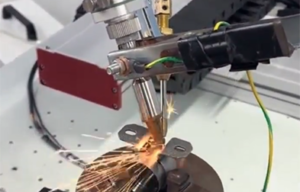
• Works with automation or CNC systems
5. How Laser Welders Improve Efficiency
Laser welding improves efficiency in five key ways:
• Faster welding speed — 2 to 10 times faster than traditional methods. Ideal for continuous production.
• Higher precision — Narrower welds with better control. Less rework, less waste.
• Minimal post-processing — Smooth welds and low heat mean less grinding and shaping.
• Automation ready — Easily integrates with CNC or robotic arms for unattended operation.
• Lower energy use — Focused energy cuts power costs.
6. Industry Applications of Laser Welding Machines
Laser welding is used across many industries:
• Automotive: battery modules, frames, exhaust pipes
• Electronics: connectors, shielding housings, precision parts
• Kitchenware: stainless steel sinks, cookware, oven parts
• Medical devices: surgical tools, implants
• Jewelry: precision welding of gold and silver
• Mold repair: injection molds, die-casting molds
• New energy batteries: battery cases, tabs, electrodes
• Small appliances: electric kettles, food processors, coffee makers
• Hardware tools: wrenches, cutters, fasteners
• Furniture: metal chair legs, frames
• Signage: lightboxes, stainless steel letters
7. Case Studies
Case 1: Automotive battery modules
A leading EV manufacturer switched to fiber laser welding. Welding time dropped by approximately 50%, and scrap rate dropped by about 30%. The system used a four-axis laser head with automatic path detection for consistent results.
Case 2: Kitchenware manufacturing
A stainless steel sink maker switched to handheld laser welding. Production capacity doubled, and polishing time was cut in half. The system used a wobble welding head to handle complex weld shapes.
8. How to Choose the Right Laser Welder
Key factors to consider:
• Material type and thickness
• Required welding speed
• Automation needs
• Budget and ROI expectations
Recommended machine types:
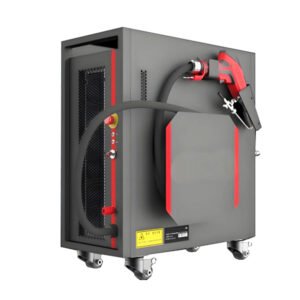
• Handheld fiber laser welders
• Desktop precision laser welders
• CNC-integrated automated welding systems
For complex or variable welds, choose a welder with a wobble function. It handles tricky geometries better.
9. FAQ
Q1: Can laser welding replace traditional welding?
A1: Not completely. But for high-precision, high-efficiency jobs, it greatly reduces the need for traditional methods.
Q2: Can beginners operate laser welders?
A2: Yes, especially handheld types, which are user-friendly and easy to operate.
Q3: What materials can be welded?
A3: Stainless steel, carbon steel, aluminum, copper, brass, gold, titanium alloys, and more..
Q4: What are the drawbacks?
A4:Higher upfront cost, and results can be affected by surface cleanliness and working conditions.
Q5: Is shielding gas needed?
A5: Yes. Common gases like nitrogen and argon help prevent oxidation and improve weld quality.
10. Conclusion
Laser welding has changed how metal processing works. With faster speeds, minimal heat distortion, and strong automation support, it‘s now a key part of modern manufacturing.
For companies that want higher output, lower costs, and a competitive edge, laser welding is a smart investment.