111-1024x458.png)
Is laser welding stronger?
Compare laser vs traditional welding strength, applications, and limitations.
This is popup title
You don't need to waste your time and money anymore.
BLOG
CONTACT US
Is Laser Welding Stronger Than Traditional Welding?
1. Introduction
A common question from buyers is: Is laser welding stronger than traditional welding?
As a laser equipment manufacturer, we hear this question often. This article compares the strength, applications, and value of both technologies from a buyer’s perspective — to help you make an informed decision.
2. What Is Laser Welding?
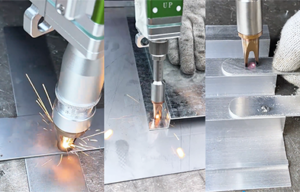
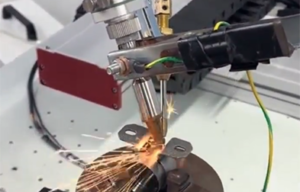
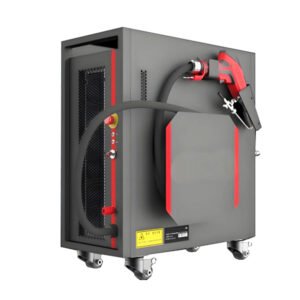
Laser welding uses a high-energy laser beam to melt and join metals. It‘s known for high speed and high precision. Common types include continuous fiber laser welding, pulsed laser welding, and handheld laser welding.
3. What Is Traditional Welding?
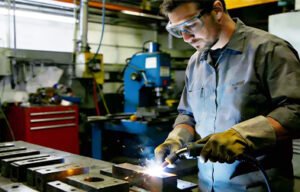
Traditional methods include arc welding, TIG, MIG, and resistance welding. These techniques have been widely used in manufacturing and repair. They rely on electrical current and filler materials to join metals.
4. Comparing Strength: Laser Welding vs Traditional Welding
Under the same material and process conditions, laser welded joints are tighter, have a smaller heat-affected zone, and offer better mechanical performance. Deep penetration welding creates denser internal structures, giving you higher tensile strength and better fatigue resistance than traditional welding.
5. Factors That Influence Welding Strength
• Material type
• Welding parameters (power, speed, focus)
• Heat input and cooling rate
• Welding method and position
• Operator skill
6. Real-World Applications: Where Laser Welding Machines Excel
• Battery enclosure welding
• Medical device welding
• Jewelry and precision welding
• Automotive manufacturing
• Stainless steel kitchenware
• High-end mold repair
7. Advantages of Laser Welding Machines
• Higher joint strength
• Precision control with low distortion
• Non-contact operation
• Automation and robot ready
• Less post-weld processing
8. Limitations of Laser Welding Machines
• Higher initial equipment cost
• Requires clean surface for best results
• Not ideal for materials over 10 mm thick
• Complex geometries may require special fixturing
9. How to Choose the Right Welding Method?
• For high strength, precision, and automation → choose laser welding
• For tight budgets or simple repairs → traditional welding may work
• Consider your materials, production volume, and appearance needs
10. Frequently Asked Questions (FAQ)
Q1: What materials are suitable for laser welding?
A1: Stainless steel, carbon steel, aluminum, copper, titanium, brass, gold, iron, etc.
Q2: Is laser welding stronger than traditional welding?
A2: Yes, for most industrial applications — especially where joint strength, sealing, and appearance matter.
Q3: Is it easy to operate?
A3: Handheld laser welders are beginner-friendly and support automation configurations.
11. Conclusion
In terms of strength, efficiency, and finish quality, laser welding is a superior choice for many industrial applications. If you want stronger, more precise products, laser welding is the answer.
Ready to upgrade your welding?
Contact us today. Our team can help you find the right laser welding machine for your production needs — with technical support, customization, and fast global delivery.