111-1024x458.png)
Better kitchen equipment starts with better welds
Clean, strong, fast laser welding for sinks, ovens, and hoods.
This is popup title
You don't need to waste your time and money anymore.
BLOG
CONTACT US
Laser Welding for Kitchen Equipment: Is It the Right Choice?
Introduction to Kitchen Equipment Manufacturing Challenges
Kitchen equipment — sinks, cabinets, ovens, hoods — must be strong, durable, and good-looking. Most are made from stainless steel or other corrosion-resistant metals. They have to stand up to daily use, moisture, and harsh cleaning chemicals. That means welds need to be strong and clean.
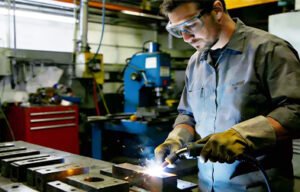
Traditional welding often falls short on consistency, speed, and appearance. So the real question is: Is laser welding the right solution for kitchen equipment manufacturing?
Overview of Laser Welding Technology
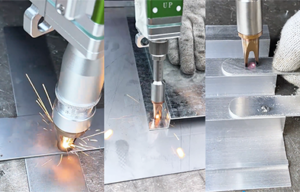
Laser welding uses a focused beam to melt and join metals with high precision. Key features:
• Non-contact process with minimal heat-affected zone
• Deep penetration and narrow seams
• High speed and automation-ready
• Works on thin and thick metals with excellent control
Laser welders range from handheld fiber lasers for flexible work to platform and scanner-based systems for automated production.
Materials Commonly Used in Kitchen Equipment
Most kitchen equipment uses stainless steel (grades 304 and 316) for its corrosion resistance and hygienic properties. Aluminum and galvanized steel are also used in some parts. Laser welding works especially well on stainless steel — it gives clean welds without hurting corrosion resistance or surface finish.
Advantages of Using Laser Welding Machines in Kitchen Equipment Manufacturing
1. Superior weld quality and aesthetics
Laser welding gives you precise, narrow seams with little discoloration or distortion — critical for visible welds on kitchen appliances.
2. Higher production efficiency
Faster speeds and automation options boost throughput significantly.
3.Better durability and hygiene
Continuous, gap-free welds reduce bacterial growth and improve resistance to moisture and chemicals.
4. Less distortion and post-processing
Minimal heat input means thin metal won’t warp. Often, no grinding or polishing is needed.
5. Flexibility across product types
One laser welder can handle everything from small sinks to large oven frames.
Comparison Between Laser Welding and Traditional Welding Methods
Here’s how laser welding compares to traditional methods:
| Feature | TIG Welding | MIG Welding | Spot Welding | Laser Welding |
|---|---|---|---|---|
| Heat Affected Zone | Large | Moderate | Large | Minimal |
| Welding Speed | Slow | Moderate | Fast | Very Fast |
| Weld Seam Appearance | Moderate | Moderate | Poor | Excellent |
| Automation Capability | Low | Medium | Low | High |
| Post-Weld Processing | Required | Required | Usually required | Minimal |
Laser welding outperforms traditional methods in speed, precision, and weld aesthetics, all essential factors in kitchen equipment production.
Types of Laser Welding Machines Suitable for Kitchen Equipment
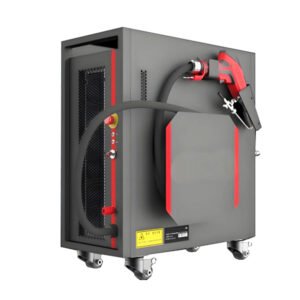
• Handheld fiber laser welders — portable and flexible. Good for large or complex parts that need on-site welding.
• Platform laser welders — fixed setups for batch production of standard parts like sinks and stove panels.
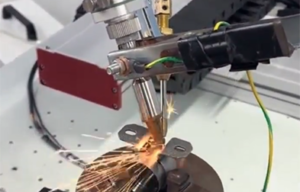
• Scanner-based (galvo) laser welders — fast spot welding and intricate patterns on smaller components.
• Automatic robotic laser welding systems — for high-volume production with robotic arms and conveyors.
Real-world Applications and Case Studies
Case 1: Stainless steel sink production
A manufacturer switched to a platform fiber laser welder. Welding time dropped by approximately 30%, and surface finish improved — cutting polishing costs.
Case 2: Oven and range hood frames
A factory switched to handheld laser welders. Weld quality improved, and distortion was minimized.
Case 3:Kitchen cabinet batch production
An OEM supplier adopted automatic laser welding systems. Throughput increased while quality remained consistent across thousands of units per month.
Implementation Considerations for Manufacturers
Before adding laser welding, manufacturers should consider:
• Initial cost and ROI timeline
• Operator training and safety
• Material thickness and speed requirements
• Shielding gas (argon or nitrogen)
• Fixturing for automated systems
Good planning makes for a smooth transition and better results.
Conclusion: Is Laser Welding the Future for Kitchen Equipment Production?
With its precision, speed, and weld quality, laser welding is not just suitable — it’s becoming essential for modern kitchen equipment manufacturing. It helps you make durable, hygienic, good-looking products efficiently.
Choosing the right laser welding technology can give your kitchen equipment business a real competitive edge.