111-1024x458.png)
Fiber laser welding for better batteries
Faster, cleaner, more precise. Why battery makers are switching to fiber laser welding.
This is popup title
You don't need to waste your time and money anymore.
BLOG
CONTACT US
Why Battery Manufacturers Choose Fiber Laser Welding
1. Introduction
Demand for EVs, energy storage, and portable electronics is rising fast. Battery makers need higher production speed, fewer defects, and consistent quality.
Fiber laser welding is solving these problems. This article explains why more manufacturers are switching to it for battery production.
2. The Demands of Modern Battery Manufacturing
Battery manufacturing demands high volume, tight tolerances, and strict safety. Key challenges include:
• Miniaturized components
• High speed with low rejection rates
• Resistance to thermal damage
• Clean, non-contact welding
• Compatibility with automated lines
Fiber laser welding solves all of these.
3. What Is Fiber Laser Welding?
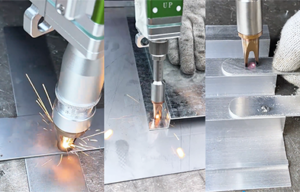
Fiber laser welding uses a high-intensity laser beam to join metal. It delivers concentrated energy — ideal for thin, conductive, or heat-sensitive battery materials.
The beam comes through an optical fiber, giving you precise control, deep penetration, and low heat input. That’s why it works so well on copper, aluminum, nickel, and stainless steel for battery cells and packs.
4. Advantages of Fiber Laser Welding in Battery Production
4.1 High Precision for Miniature Components
Battery cells and connectors are tiny — often just millimeters wide. Fiber lasers deliver pinpoint accuracy with spot sizes as small as 20 microns, giving you clean, tight welds without affecting nearby components.
4.2 Faster Welding Speed
Battery cells and connectors are tiny — often just millimeters wide. Fiber lasers deliver pinpoint accuracy with spot sizes as small as 20 microns, giving you clean, tight welds without affecting nearby components.
4.3 Excellent Weld Quality and Consistency
Fiber laser welding gives you consistent, repeatable results. Welds are strong, clean, and free of cracks or porosity — which means better battery reliability and longer life.
4.4 Minimal Thermal Distortion
Battery materials are sensitive to heat. The low heat input of fiber lasers ensures minimal thermal impact, preventing deformation or damage to battery components.
4.5 Compatibility with Automation
Fiber laser welders are easily integrated with robotic arms, vision systems, and CNC platforms, supporting fully automated welding cells for high-efficiency production lines.
5. Typical Battery Components That Use Fiber Laser Welding
• Battery tabs (aluminum, nickel, copper)
• Busbars and connectors
• Cylindrical and prismatic cell enclosures
• Battery module and pack assembly
• Sealing battery cans and covers
• Current collectors and terminals
These components require reliable and precise joins, making fiber lasers the preferred technology.
6. Comparison with Other Welding Methods
Here’s how fiber laser welding compares to other methods:
| Feature | Fiber Laser Welding | Resistance Welding | Ultrasonic Welding | TIG Welding |
|---|---|---|---|---|
| Speed | Very High | Moderate | High | Low |
| Heat Input | Low | Medium | Low | High |
| Precision | Very High | Moderate | High | Moderate |
| Automation | Excellent | Good | Good | Limited |
| Maintenance | Low | High | Medium | High |
| Material Versatility | Excellent | Limited | Limited | Good |
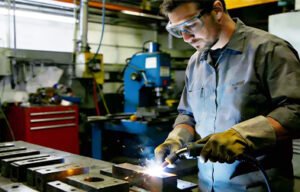
Fiber laser welding consistently outperforms older methods in battery manufacturing, especially in efficiency and automation readiness.
7. Industry Case Studies: Fiber Laser Welding in Battery Production
Case 1: Electric Vehicle Battery Packs
An EV battery maker added a 2kW fiber laser welder for copper busbars and aluminum tabs. Production output increased by about 25%, with near‑zero thermal damage and consistently high weld accuracy using a vision-guided robotic system.
Case 2: Consumer Electronics Batteries
A portable device battery maker switched from ultrasonic to fiber laser welding. The result: cleaner welds on thin foils, no burrs, and roughly 40% less post-processing.
8. Recommended Fiber Laser Welding Machines for Battery Manufacturers
JOYLASER recommends these models for battery applications:
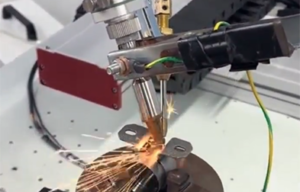
• Platform fiber laser welder — precision busbar and cell welding with programmable XYZ motion control.
• Galvo fiber laser welder — high-speed tab welding with dynamic focusing.
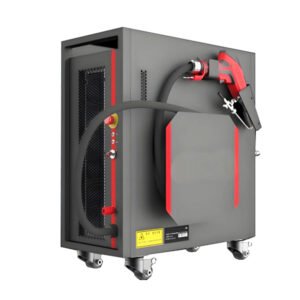
• Integrated automated fiber laser system — for large-scale pack production with robotic handling.
All three are built for reliability, speed, and flexibility on battery assembly lines.
9. Key Considerations When Choosing a Fiber Laser Welder
• Material type and thickness — copper, aluminum, nickel
• Joint design — overlap, fillet, butt
• Power — typically 1kW to 3kW
• Cooling and stability
• Automation compatibility and vision integration
• After-sales support
10. Future Trends in Battery Manufacturing and Laser Technology
Solid-state batteries, higher energy density, and sustainable manufacturing will drive even more demand for fiber laser welding. As materials and designs get more complex, laser welding stays ahead because it adapts and stays precise.
AI-assisted systems, real-time monitoring, and smart factory integration will keep improving quality and control.
11. Conclusion
Fiber laser welding isn‘t just an option anymore — it’s a critical tool for battery makers who need efficiency, precision, and scale. Whether you‘re making EV cells, storage system packs, or compact electronics batteries, fiber laser welding gives you speed, quality, and cost control.
Adopt it now and stay competitive.