111-1024x458.png)
Picking the right laser welder for car parts? Start here.
Choose the right laser welding machine for automotive parts. Materials, power, automation, and real case studies.
This is popup title
You don't need to waste your time and money anymore.
BLOG
CONTACT US
How to choose the right laser welding machine for automotive parts
1. Introduction
The automotive industry is changing fast. Precision, speed, and quality matter more than ever. Laser welding is one of the key technologies driving this change. Whether you make engine parts or EV battery housings, the right laser welder improves efficiency and product durability.
2. Why Laser Welding Is Essential for Automotive Parts
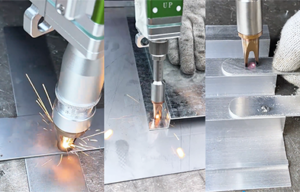
Laser welding gives you high precision, deep penetration, and minimal heat distortion. That makes it ideal for the tight tolerances in automotive manufacturing. Compared to traditional methods, laser welding is faster, needs less post-processing, and produces stronger, cleaner welds.
3. Key Factors to Consider When Choosing a Laser Welding Machine
3.1 Material Compatibility
Automotive parts use many materials: aluminum, stainless steel, carbon steel, copper, and some composites. Not all laser welders work equally well on all of them. Fiber lasers, for example, are especially good for reflective metals like aluminum and copper.
3.2 Welding Method and Technique
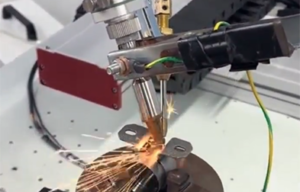
Your choice depends on the welding technique: spot welding, seam welding, or deep penetration welding. For thin-walled parts like battery enclosures or sensors, pulsed fiber laser welding gives you controlled heat input and less distortion.
3.3 Machine Power and Beam Quality
For thicker materials or high-speed lines, 1000W to 3000W is typically the right power range. High beam quality also gives you fine, accurate welds — critical for automotive parts.
3.4 Automation and Integration Capabilities
If your factory uses robotic arms or automated lines, pick a machine that fits into your existing setup. Many industrial laser welders now have interfaces for robots and CNC systems.
3.5 Joint Precision and Repeatability
Consistency is critical in auto manufacturing. Look for machines with stable output, smart controls, and consistent weld quality over long periods.
3.6 Cost vs Performance
Look at both upfront cost and long-term ROI. A cheap machine might save money now, but it may not have the durability or precision for automotive-grade welding.
4. Types of Laser Welding Machines for Automotive Use
4.1 Fiber Laser Welding Machines
Fiber lasers are the most popular choice. They have excellent beam quality, high efficiency, and can weld many metals. They work especially well on high-strength steel and aluminum parts.
4.2 Continuous vs Pulsed Lasers
Continuous wave (CW) lasers are good for thick parts and long seams. Pulsed lasers give you better control for delicate components. Your welding goals will tell you which type to choose.
4.3 Robotic and CNC Integrated Systems
Modern automotive laser systems often combine fiber lasers with robots. This gives you excellent automation, speed, and accuracy. These systems cut labor costs and boost production efficiency.
5. Case Studies: Laser Welding in Automotive Applications
5.1 Battery Module Welding
Fiber laser welding is ideal for battery tabs and housings. Its minimal heat-affected zone and high speed ensure safety and durability for EV batteries.
5.2 Car Door and Window Frame Welding
Laser welding is used to assemble lightweight door panels and window frames, improving vehicle strength without increasing weight.
5.3 Engine Component Repair
Laser welders can restore worn or damaged engine parts, such as valve seats and cylinder heads, with pinpoint accuracy.
5.4 EV Heat Exchanger and Radiator Welding
These components require intricate welds with minimal distortion—perfectly suited for laser technology thanks to its controlled energy delivery.
6. Safety and Compliance Considerations
Make sure the machine meets CE, FDA standards for your target markets. Also look for safety features like enclosed welding heads, fume extractors, and protective shields.
7. Recommended Models for Automotive Laser Welding
When choosing a model, look at:
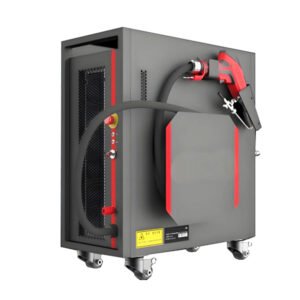
• 1000W–3000W fiber laser welders for general parts
• Pulsed fiber lasers for delicate components
• Robotic laser welders for full automation
• Platform laser welding systems for batch work
A good supplier will also offer customization for your specific needs.
8. Conclusion
Choosing the right laser welding machine for automotive parts means knowing your materials, production goals, and integration needs. The right equipment gives you better quality, faster turnaround, and lower operating costs.
9. Frequently Asked Questions
Q1: Can one laser welding machine handle multiple car parts?
A: Yes, versatile models with programmable settings can weld various parts like battery housings, frames, and radiators.
Q2: Is fiber laser welding better for EV components?
A: Absolutely. Its high precision and low thermal input make it ideal for sensitive electric vehicle parts.
Q3: What is the lifespan of a fiber laser welder in automotive use?
A: Typically 100,000 hours or more with proper maintenance.
Q4: Do I need a robot for laser welding car parts?
A: Not necessarily, but integration with robots significantly improves efficiency and consistency in mass production.
Q5: How does laser welding compare to TIG or MIG welding for car manufacturing?
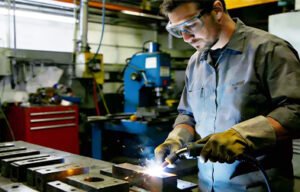
A: Laser welding offers faster speed, higher precision, and lower heat distortion, especially on thin metals.