111-1024x458.png)
Extend mold life. Not replace it.
Laser weld repairs cracks, edges, and wear marks. No scrapping.
This is popup title
You don't need to waste your time and money anymore.
BLOG
CONTACT US
Mold Repair with Laser Welding: The Ideal Solution to Extend Mold Lifespan
1. Introduction: The Importance and Challenges of Mold Repair
Molds are essential tools in manufacturing. They play a critical role in producing high-quality products. Over time, molds develop wear, cracks, or deformation, which hurts product quality and production efficiency. Good mold repair extends mold life and lowers replacement costs.
However, mold repair has challenges: precision, weld strength, and thermal distortion. Choosing the right method is a key part of mold maintenance.
2. Limitations of Traditional Mold Repair Techniques
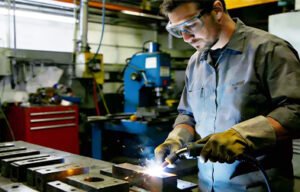
Traditional mold repair methods include manual welding, arc welding, and brazing. These methods have several drawbacks:
• Large heat-affected zones reduce hardness around the weld and cause deformation or cracking.
• Low repair precision — not enough for molds with complex details.
• Unstable weld quality, with defects like porosity or slag that hurt mold durability.
• Long repair cycles and high costs, which hurt production efficiency.
Because of these issues, manufacturers need a repair method that is efficient, precise, and reliable.
3. Overview of Laser Welding Technology
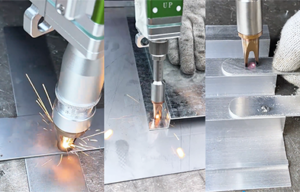
Laser welding uses a focused laser beam as the heat source to melt metal and create a weld. It offers fast speed, a small heat-affected zone, and high weld quality. As laser technology has advanced, laser welding is now widely used in automotive, hardware, and home appliance manufacturing.
Laser welding works for new mold fabrication and has also proven to be an excellent choice for mold repair.
4. Advantages of Laser Welding in Mold Repair
4.1 High Precision Repair
The laser beam diameter can be controlled down to the micrometer level. This allows very precise welding, which is ideal for repairing molds with complex shapes and fine details. High precision also prevents damage to the overall mold structure and helps maintain the mold‘s original dimensions.
4.2 Minimal Heat Affected Zone
Compared to traditional welding, laser welding produces a much smaller heat-affected zone. This reduces thermal distortion and residual stress. As a result, the mold keeps its mechanical properties after repair and needs less grinding or finishing.
4.3 Stable and High-Strength Welds
Laser welding produces dense, uniform seams with strong bonding strength. These welds can withstand high temperatures, pressure, and repeated mechanical stress during mold operation. This significantly extends mold service life.
4.4 Time and Cost Efficiency
Laser welding is fast, which shortens repair cycles. It also reduces the need for extra machining, lowering labor and material costs. Over the long term, laser welding helps companies save a significant amount on maintenance.
5. Application Scenarios of Laser Welding for Mold Repair
Laser welding applies to a wide range of mold repair tasks, including:
Repairing wear and cracks on injection molds
Reinforcing local damage on die casting molds
Edge repair on stamping molds
Welding fine cracks in stretching molds
Precision repair of special alloy molds
These applications improve mold performance and stability, helping keep production running.
6. Laser Welding Process and Equipment Selection
A typical laser mold repair process includes:
Surface Preparation: Clean the welding area to remove oil and oxidation.
Process Parameter Setup: Adjust laser power, speed, and focus based on mold material, thickness, and repair needs.
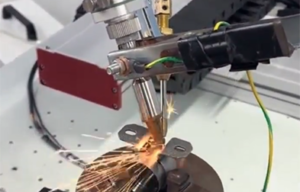
Laser Welding Operation: Perform the repair using laser welding equipment.
Post-Processing: Grind the weld seam and apply heat treatment if needed to restore mold performance.
Quality Inspection: Use non-destructive testing to verify weld quality.
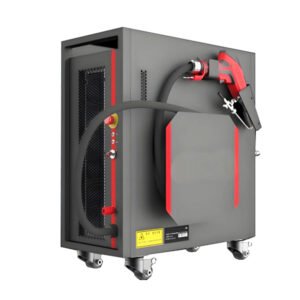
For equipment, fiber laser welding machines are the mainstream choice. They offer high power density, stable wavelength, and easy maintenance.
7. Case Study: Successful Mold Repair Using Laser Welding
An automotive parts manufacturer faced frequent production stops due to cracks in injection molds. By switching to fiber laser welding for mold repair, the company extended mold life significantly. Weld quality met the original mold strength standards. Production efficiency improved, and maintenance costs dropped noticeably.
8. Future Trends of Laser Welding and Its Impact on the Mold Industry
As laser equipment becomes more automated and intelligent, laser welding will become even more efficient and precise. Integration with robotics and data analytics will enable unattended operation and real-time quality monitoring in mold repair. This will further reduce maintenance costs and production risks.
In addition, laser technology is energy-efficient and environmentally friendly, which aligns with the manufacturing industry’s sustainability goals.
9. Conclusion: Why Laser Welding is the Ideal Solution for Mold Repair
Laser welding offers high precision, low heat impact, strong welds, and high efficiency. It solves the key challenges of traditional mold repair.
By adopting laser welding, manufacturers can extend mold life, improve product quality, and reduce maintenance costs. For companies that value quality and efficiency, laser welding is the best choice and a key trend for the future of mold repair.