111-1024x458.png)
Fix molds. Not replace them.
Laser welding repairs cracks, chips, and surface damage. Low heat, high precision
This is popup title
You don't need to waste your time and money anymore.
BLOG
CONTACT US
Error: Contact form not found.
Laser Welding Machine for Mold Repair | Precise and Cost-effective Mold Refurbishment
Introduction to Mold Repair and the Role of Laser Welding
Molds are essential in automotive, electronics, plastic, and die-casting industries. Over time, they wear out or develop cracks, chips, and surface damage. Traditional repair methods are slow and expensive.
Laser welding changes that. It‘s non-contact, precise, and uses low heat. It restores molds close to original condition — less waste, longer mold life.
What is a Laser Welding Machine
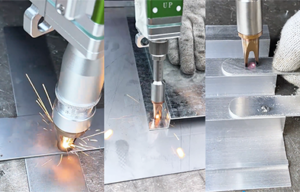
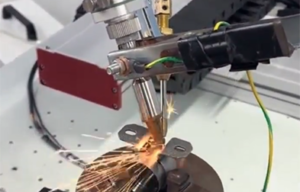
A laser welder uses a focused beam to melt and join metal. It’s precise, stable, and easy to control — ideal for mold repair and micro-welding.
Common types:
• Continuous fiber laser welder
• Pulsed laser welder
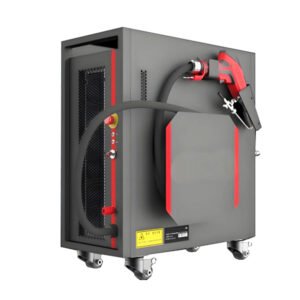
• Desktop laser welding system
Each type suits different mold materials, defect sizes, and precision needs.
Why Use Laser Welding for Mold Repair
Why laser welding works for mold repair:
• High precision — spot size as small as 0.2 mm. Great for fine mold details.
• Small heat-affected zone — less risk of distortion or micro-cracks.
• No material loss — only the damaged area is melted.
• Works on many metals — steel, aluminum, copper, titanium.
• Clean — little or no post-weld finishing.
Applications of Laser Welding in Mold Repair
Common applications:
• Plastic injection molds — fill cracks, fix chipped edges, resize parting lines
• Die‑casting molds — repair erosion, porosity, seam damage
• Tools and dies — fix core pins, pitting, corner wear
• Precision mold components — restore ejector pins, cavities, inserts
Advantages of Laser Welding over Traditional Welding
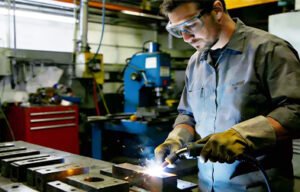
Here‘s how laser welding compares to traditional methods:
| Feature | Laser Welding | Traditional Welding |
|---|---|---|
| Heat Affected Zone | Very Small | Large |
| Welding Precision | High | Low to Medium |
| Post-processing | Minimal | Required |
| Downtime | Low | High |
| Material Compatibility | Excellent | Limited |
| Equipment Footprint | Compact | Bulky |
How to Choose the Right Laser Welding Machine for Mold Repair
Key selection factors:
• Laser type — pulsed for precision, continuous for deeper penetration
• Power — 100W to 300W, depends on material and damage depth
• Control — CNC for programmable precision
• Portability — desktop for small parts, larger systems for industrial molds
• Cooling — keeps laser stable during long jobs
Work with an experienced manufacturer to get the right configuration.
Case Studies: Laser Mold Repair in Action
Automotive Mold Repair
A car parts maker used a 200W pulsed laser welder to repair worn injection molds. Downtime dropped by about 50%. Mold replacement cost saved by roughly 30%.
Electronics Industry Application
Micro‑cracks on a smartphone mold insert were fixed with a desktop laser welder. The repair preserved fine details with no distortion. The mold kept working — no replacement needed.
Maintenance Tips for Laser Welding Machines
• Clean the lens regularly — stable laser output
• Check laser alignment — consistent precision
• Monitor cooling system — prevents overheating
• Update software — best performance
• Train operators — longer machine life, better repairs
Conclusion
Laser welding is now a standard tool for mold repair. It gives you precision, low heat, and works on many metals. It extends mold life and cuts waste.
If you‘re in automotive, electronics, or tooling, a good laser welder is a solid investment for your maintenance process.