111-1024x458.png)
Stronger welds. Faster production.
Laser welding for automotive, electronics, medical, and metal fabrication. High strength, low heat, high speed.
This is popup title
You don't need to waste your time and money anymore.
BLOG
CONTACT US
Error: Contact form not found.
Laser Welding Machines for Industrial Applications | High-Strength Welding Solutions
Introduction to Laser Welding Technology
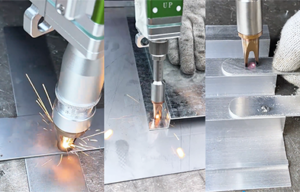
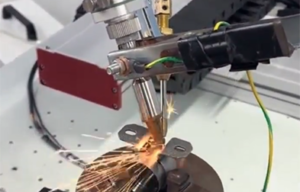
Laser welding uses a focused beam to join metals and thermoplastics. It offers precision, deep penetration, and high speed. More industries are adopting laser welding for its strength, low heat input, and productivity.
Why Strength Matters in Industrial Welding
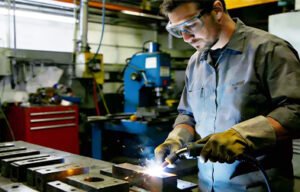
Weld strength affects product durability, safety, and performance. Weak welds cause failures, downtime, and hazards. Laser welding produces strong, clean, consistent welds — ideal for high-stress applications like automotive frames and structural metal parts.
Key Advantages of Laser Welding Machines
1. Superior weld strength — deep, narrow welds with minimal porosity
2. High precision — pinpoint accuracy for small or complex parts
3. Small heat-affected zone — less distortion, preserves metal properties
4. Clean welds — little to no post-processing needed
5. Fast processing — much faster than traditional methods
6. Non-contact process — less tool wear, lower maintenance
Major Industrial Applications
Automotive Industry
Laser welding is used for car bodies, exhaust systems, battery packs, and transmission parts. It creates lightweight, strong joints — supporting EVs and fuel efficiency.
Electronics Manufacturing
Miniaturized devices need precise, clean welds. Laser welding connects tiny wires, sensors, and circuit boards without damaging sensitive components.
Medical Device Fabrication
Surgical tools, pacemakers, and implants rely on laser welding. It‘s a clean, non-contact process that works with titanium and stainless steel.
Metal Fabrication and Sheet Metal
From enclosures to heavy machinery, laser welding handles complex shapes with speed and consistency.
Comparison with Traditional Welding Methods
| Feature | Laser Welding | MIG/TIG/Resistance |
|---|---|---|
| Strength-to-weight ratio | Higher | Lower |
| Heat input | Low | High |
| Weld aesthetics | Clean | Often requires finishing |
| Automation | Easy | More difficult |
| Precision | High | Moderate |
Traditional methods still work for thick materials and outdoor jobs. But for high-precision, high-volume production, laser welding is the better choice.
Types of Laser Welding Machines
Fiber Laser Welding Machines
Efficient, handles reflective metals like aluminum and copper. High beam quality, low maintenance.
CO₂ Laser Welding Machines
Good for non-metals and thicker sections. Requires more maintenance than fiber.
Nd:YAG Laser Welding Machines
Ideal for pulse welding. Common in medical and electronics industries.
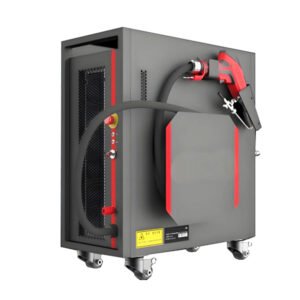
Handheld Laser Welding Machines
Portable, flexible. Easy to operate. Great for on-site or large-part welding.
Choosing the Right Laser Welding Machine
When selecting a machine, consider:
• Material type and thickness
• Required speed and precision
• Production volume
• Budget and ROI
• Automation needs
Work with an experienced supplier to get a solution tailored to your industry.
Future Trends in Industrial Laser Welding
Laser welding is moving toward higher automation, real‑time monitoring, and integration with smart factory systems. Fiber laser technology continues to improve, making machines more efficient and affordable. More industries will adopt laser welding as costs come down and capabilities expand.
Conclusion
Laser welding gives you strength, precision, and speed. It‘s a key technology for modern manufacturing. The right laser welding equipment improves weld quality — and long‑term productivity.