3C and Battery Tab Welding: Trends, Tech, and Tips
JZLASER
Introduction
As demand for 3C electronics and lithium-ion batteries grows rapidly, manufacturers need higher welding precision, efficiency, and reliability. Welding battery tabs and thin sheets involves high-frequency, high-spec processes where traditional methods often fall short. With high power density, small heat-affected zones, and easy automation, laser welding machines are becoming the preferred solution for 3C electronics and battery manufacturing. This article covers key application trends, technical choices, quality and cost considerations, and how to select the right equipment for your line.
Industry Background for 3C Electronics and Battery Tab Welding
Battery module assembly and 3C electronics assembly share several features: miniaturized components, strict electrical performance requirements, fast production cycles, and high traceability needs. Battery tab welding is especially critical because weld joints affect electrical resistance, cycle life, and safety. Solutions with inline inspection and data logging are preferred across the industry.
Overview of Laser Welding Technology
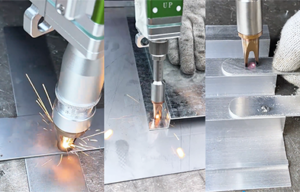
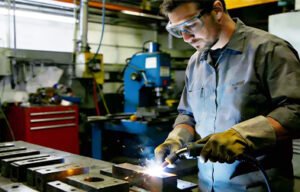
Laser welding uses a high-energy beam to locally heat and fuse workpieces without contact. Compared to traditional arc or resistance welding, it offers narrower seams, smaller heat-affected zones, higher repeatability, and easier automation. Common equipment includes fiber laser welders, QCW fiber systems, MOPA modulated lasers, and handheld laser welders. Laser spot welders are especially effective for battery tabs and small electronic components.
Fiber Laser Welding Machines and QCW Technology
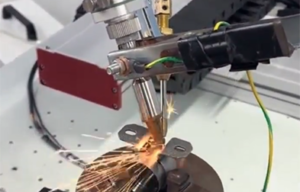
Fiber laser welders are widely used in industry for their excellent beam quality, energy efficiency, and stability. QCW (quasi continuous wave) technology delivers higher peak power in short pulses, making it ideal for spot welding and thin-sheet welding. QCW also offers better weld pool control and reduced spatter.
Handheld Laser Welding Machines and Spot Welding Solutions
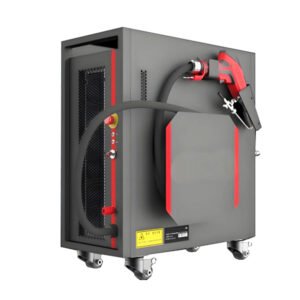
Handheld laser welders offer flexibility for field repairs, small-batch production, and maintenance. When paired with CCD vision or positioning fixtures, they can replace traditional torches in repair and low-volume work. Laser spot welders are commonly used for battery tab welding to achieve consistent, low-resistance joints.
111-1024x458.png)